Fete Votive – Aigues Mortes
Fête Votive in October – Tradition, Bulls & Camargue Spirit
Every autumn, as the heat softens and the Camargue air turns golden, villages across the region come alive for their Fêtes Votives. These annual celebrations, rooted in centuries of tradition, are dedicated to the local patron saint — but they are just as much about community, culture, and the timeless bond between people, horses, and bulls.

In October, the season reaches one of its most atmospheric points. For photographers, travellers, and locals alike, this is when the true Camargue spirit is on full display.
What is a Fête Votive?
A Fête Votive is essentially the village’s festival of thanks. Originally religious in nature — each one dedicated to a saint — the fêtes have grown into several days (sometimes weeks) of celebrations. Each town or village has its own dates, often spread across the year, and in October they reach their most vibrant expression
They combine:
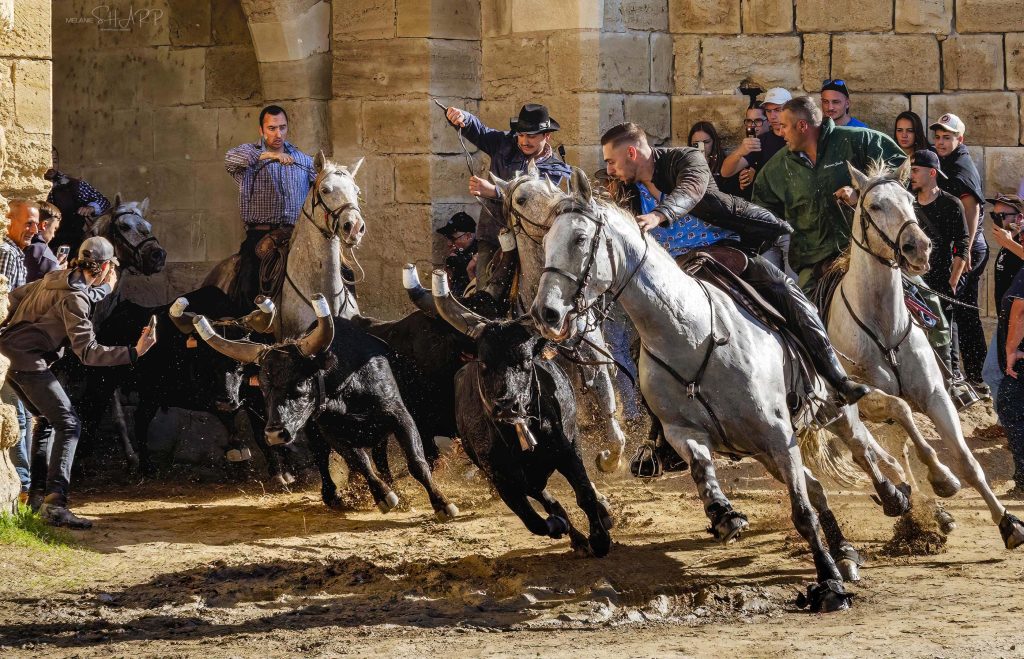
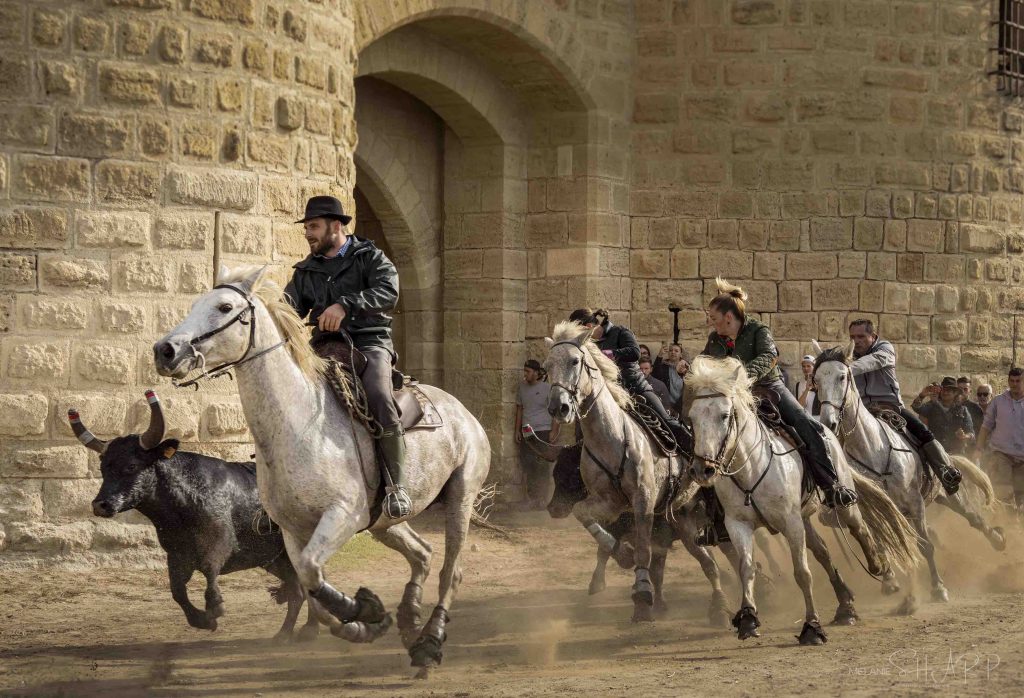
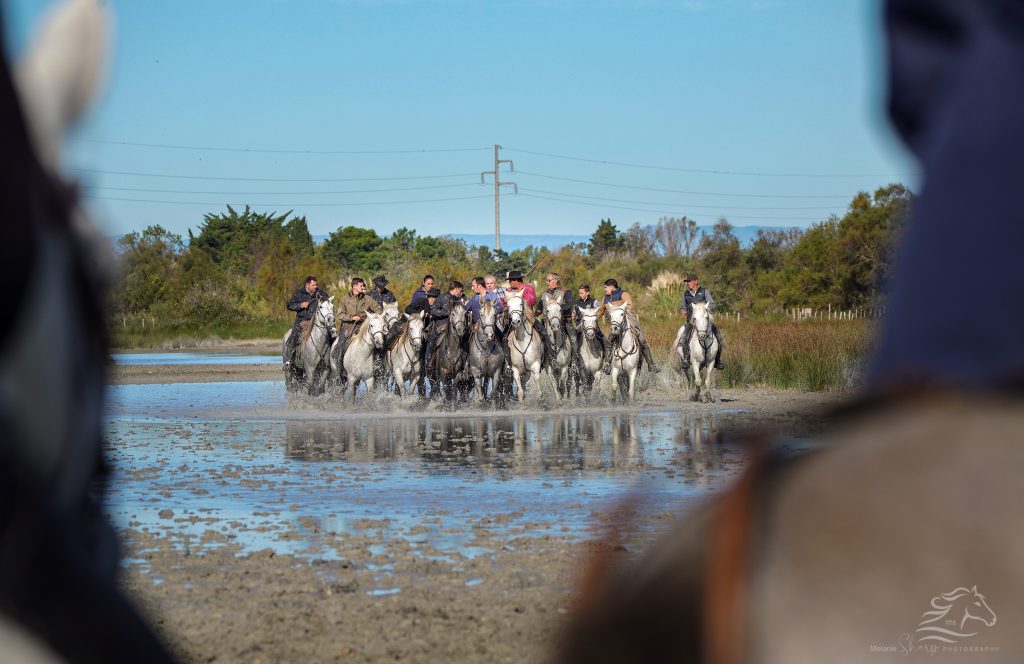
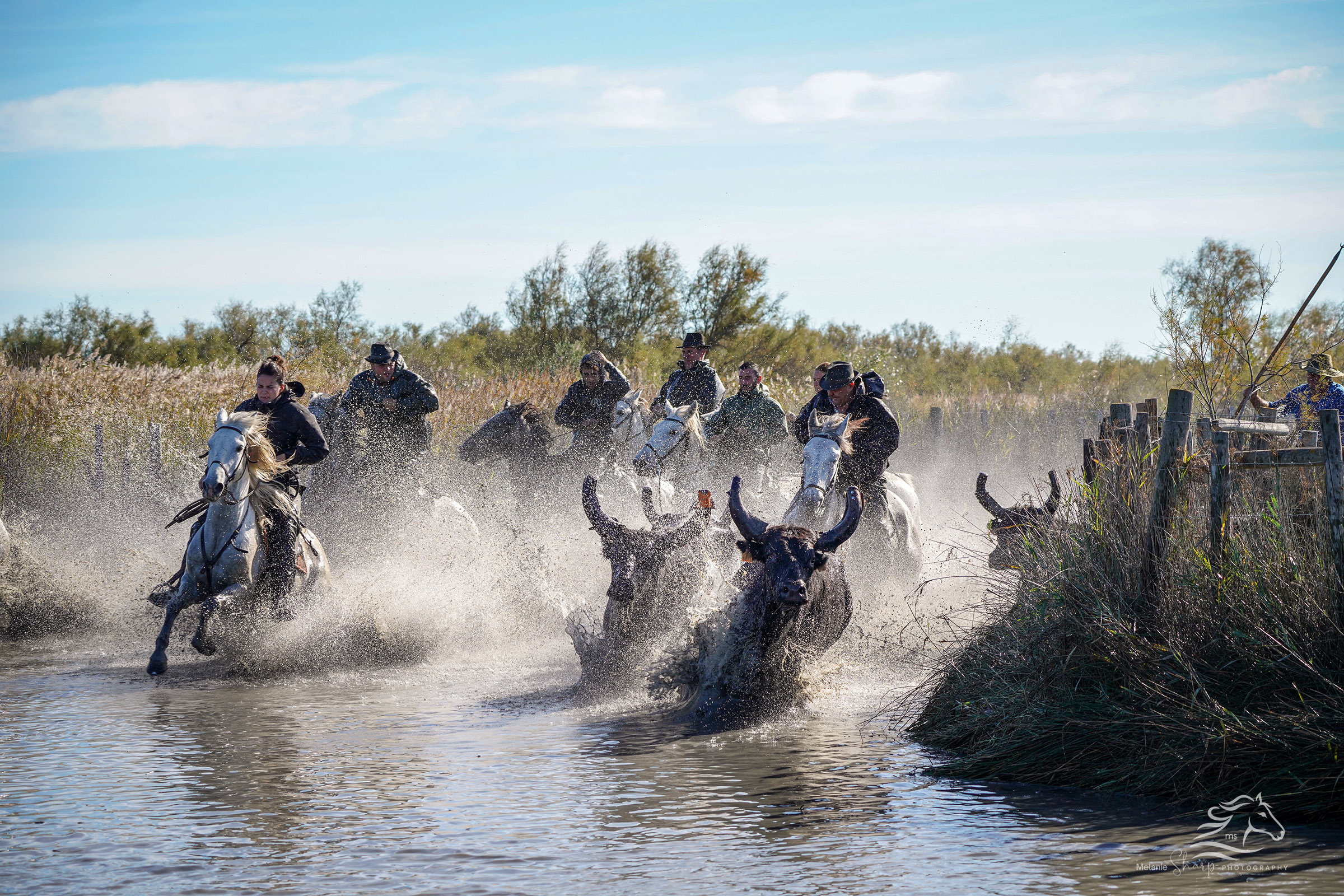
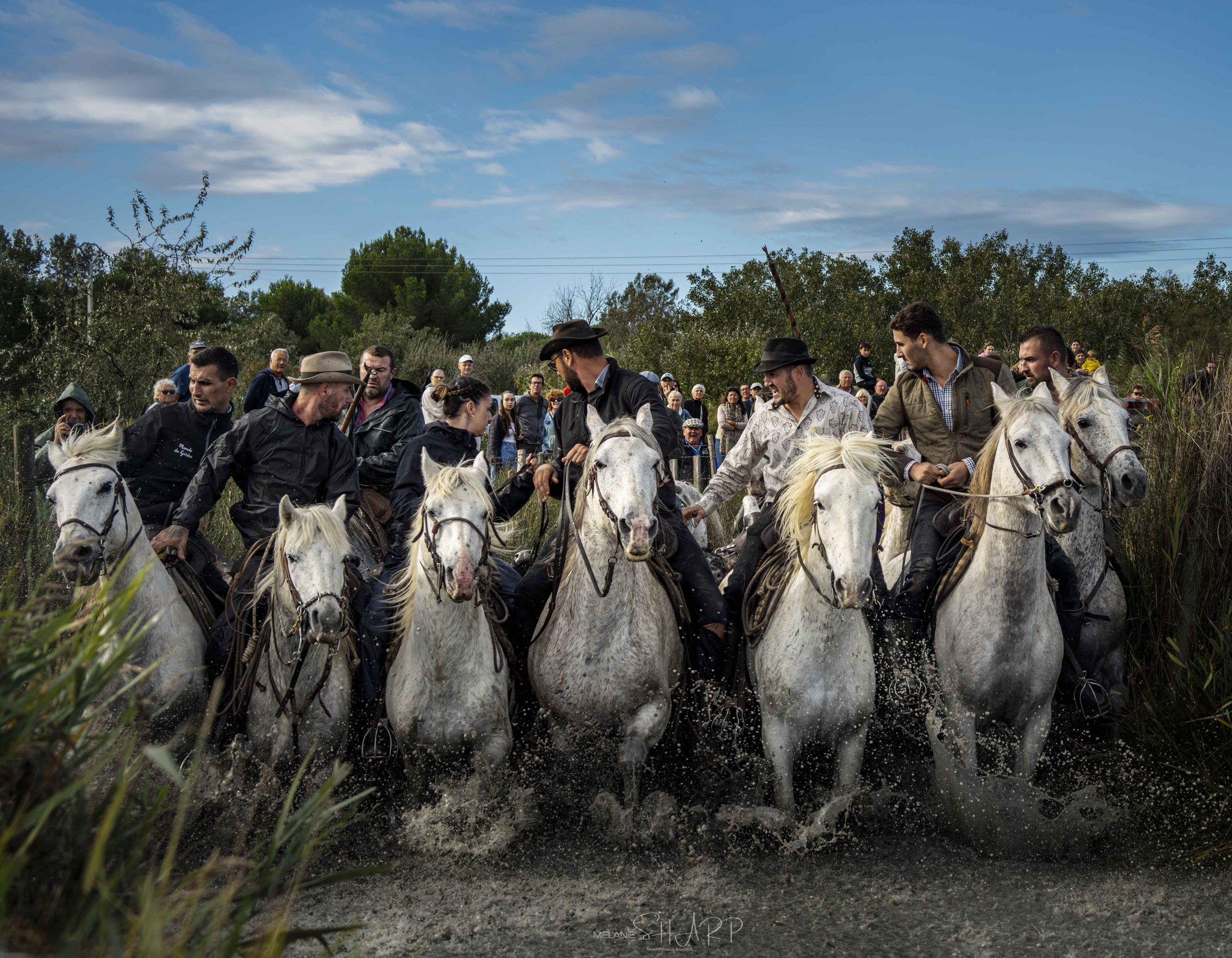
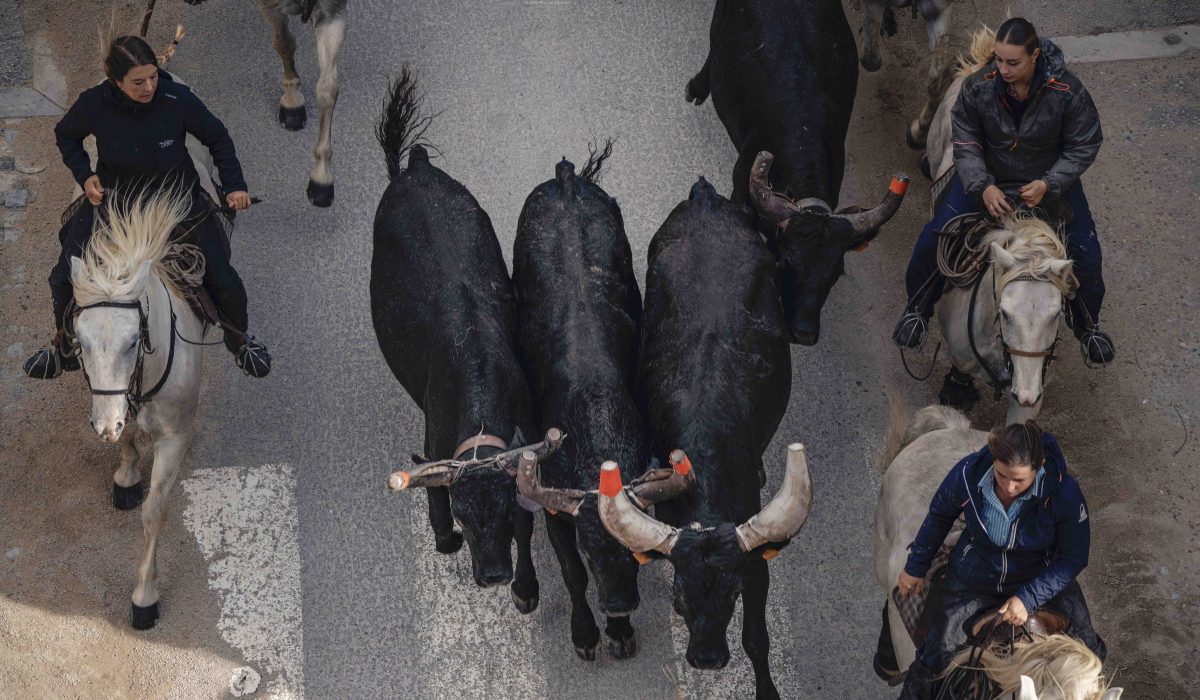
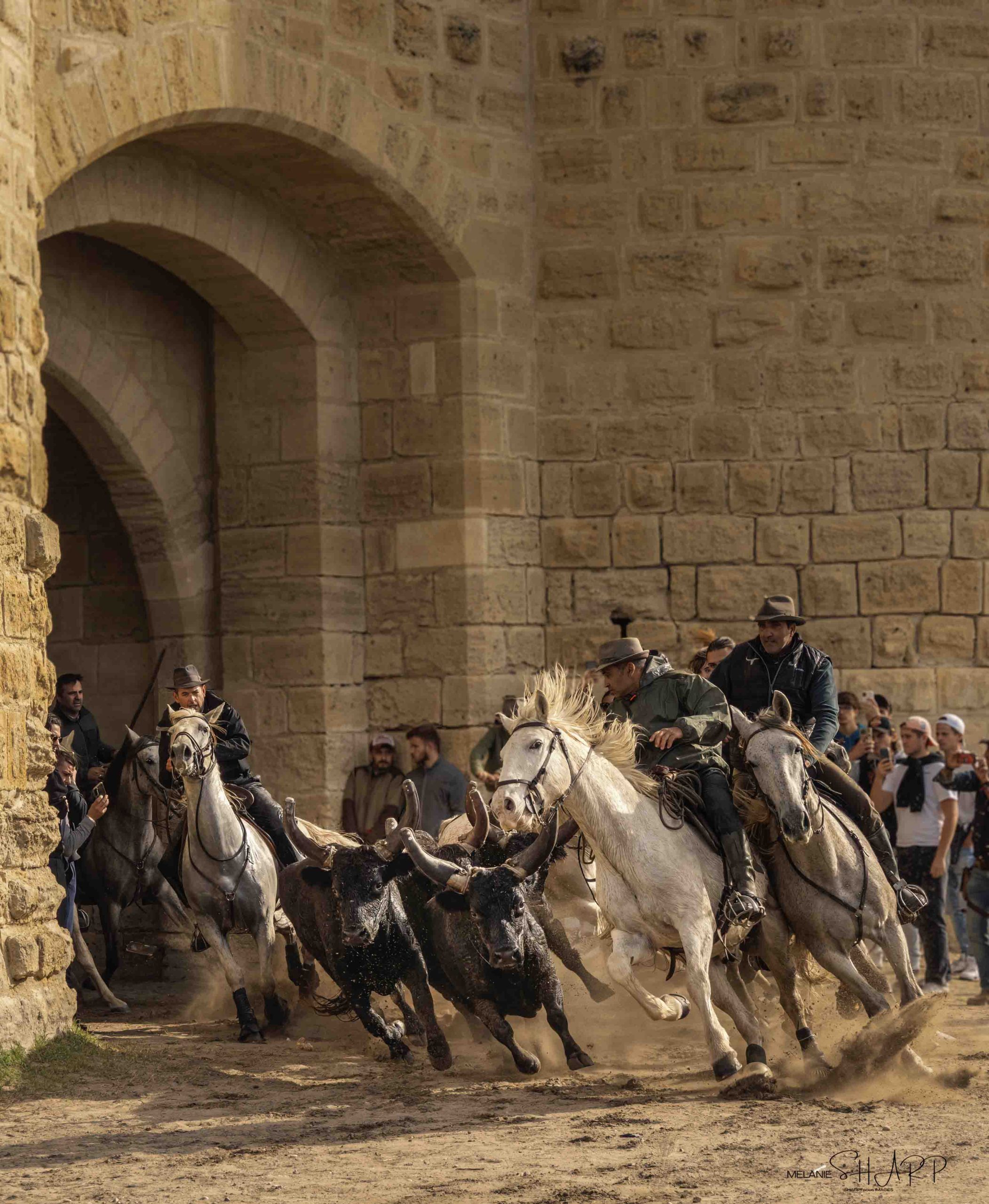
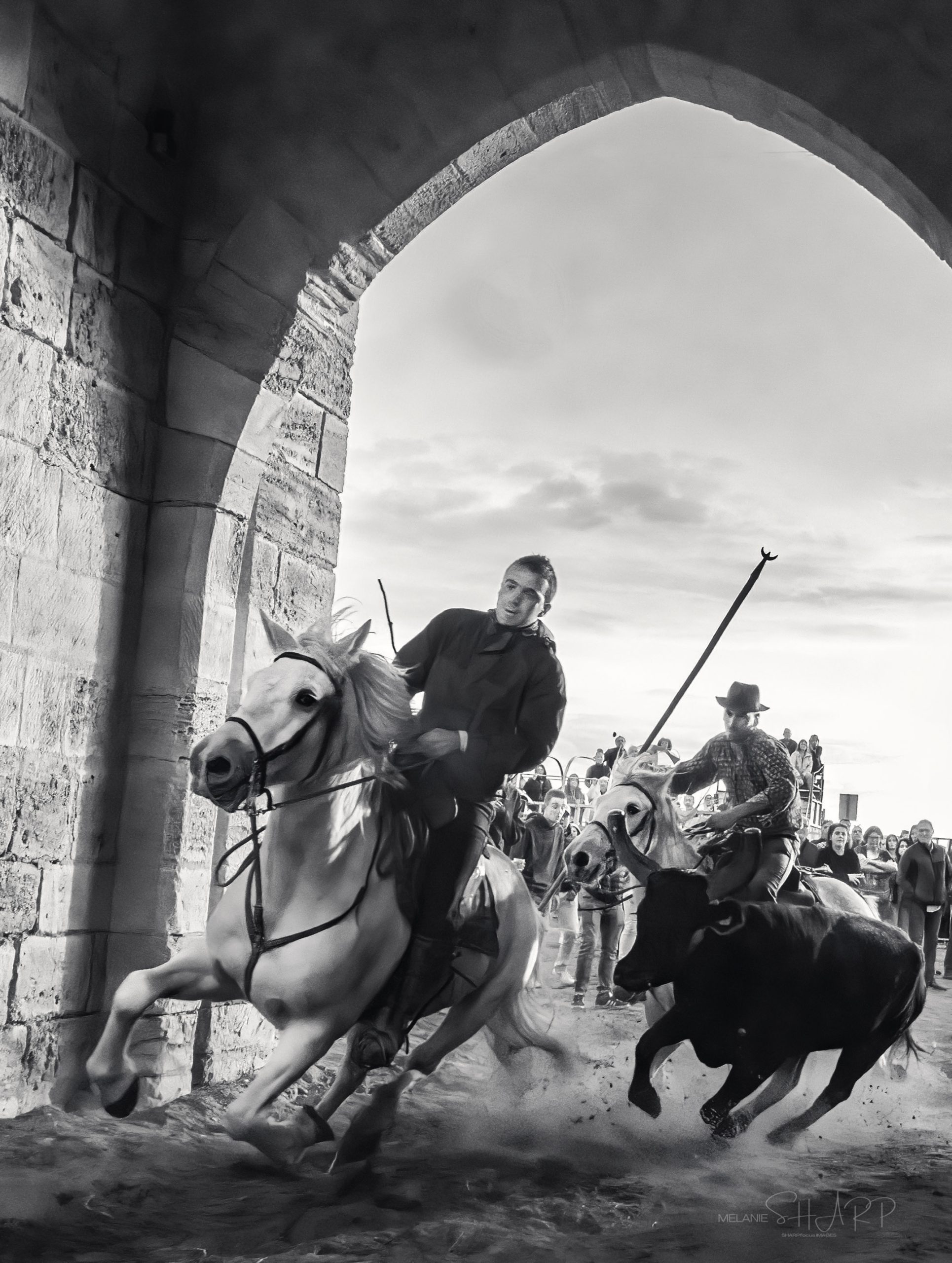
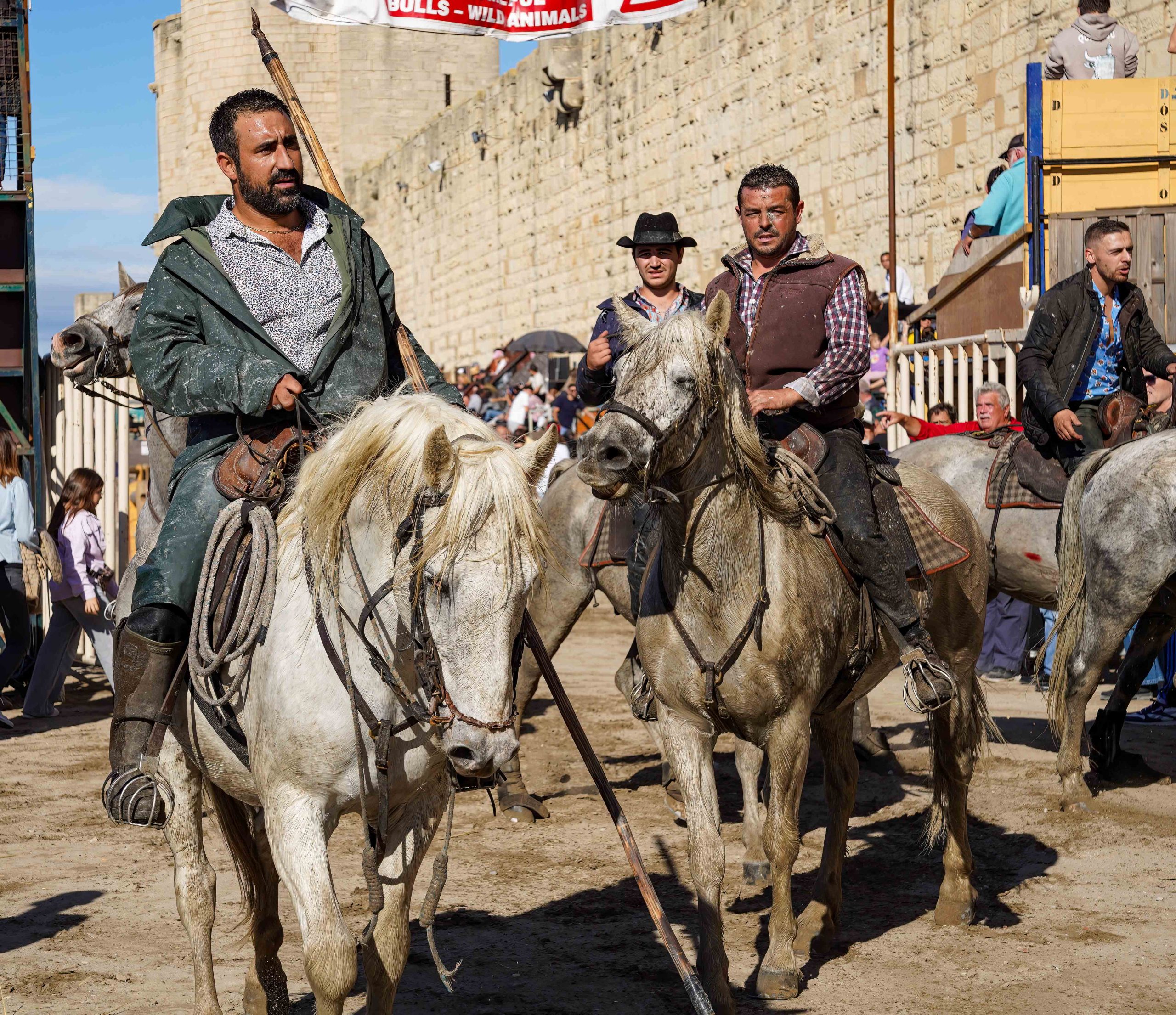
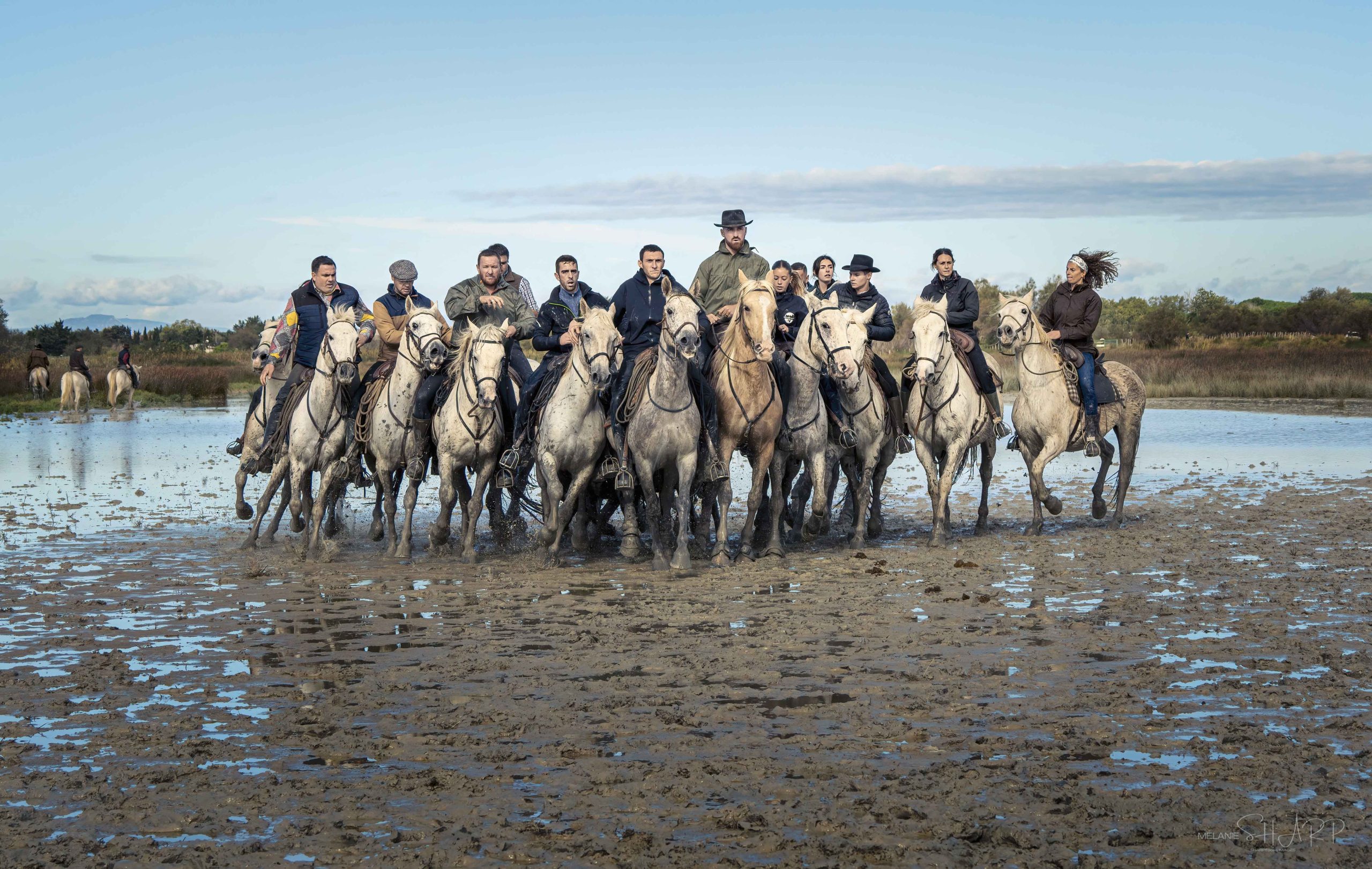
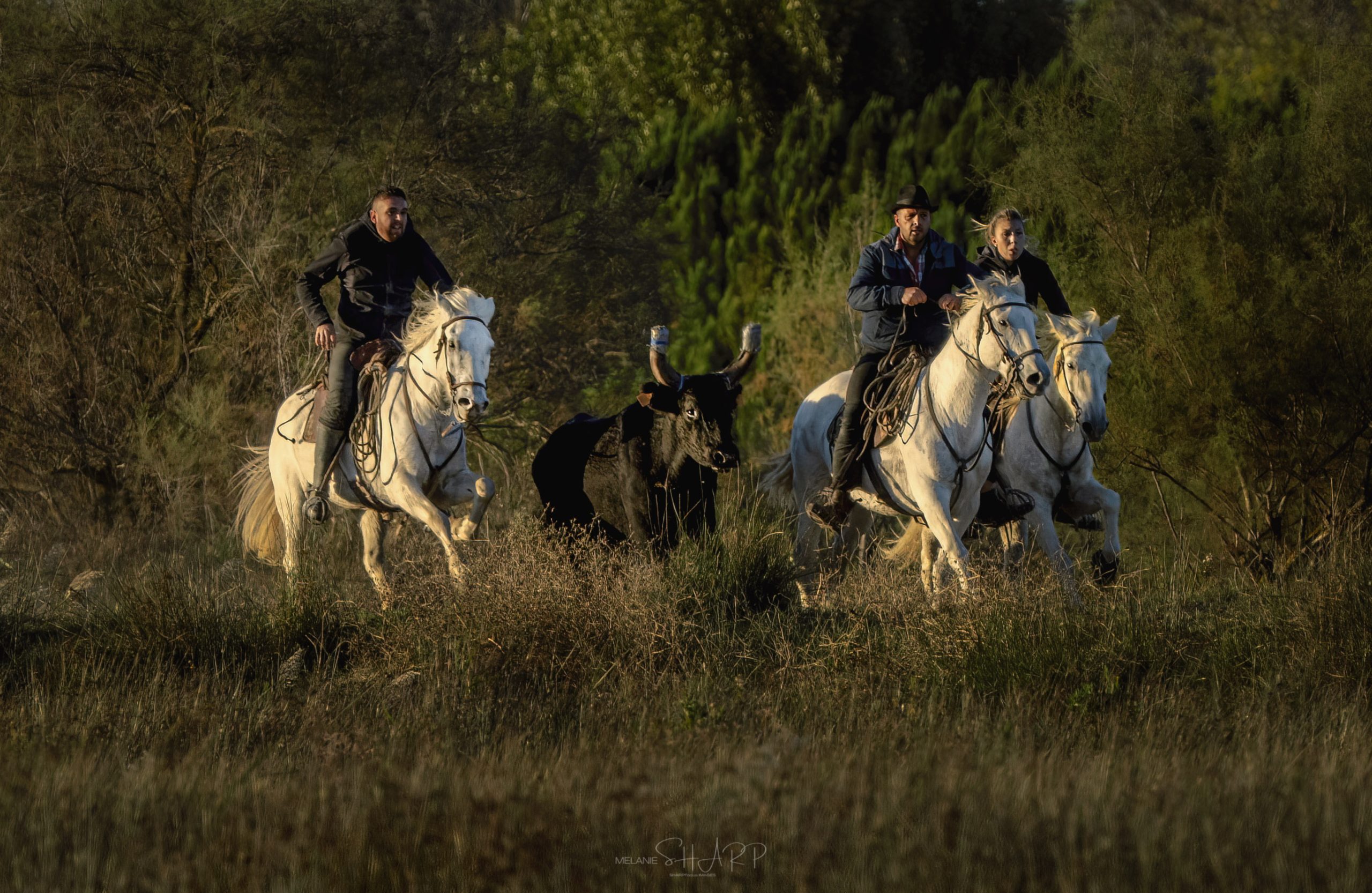
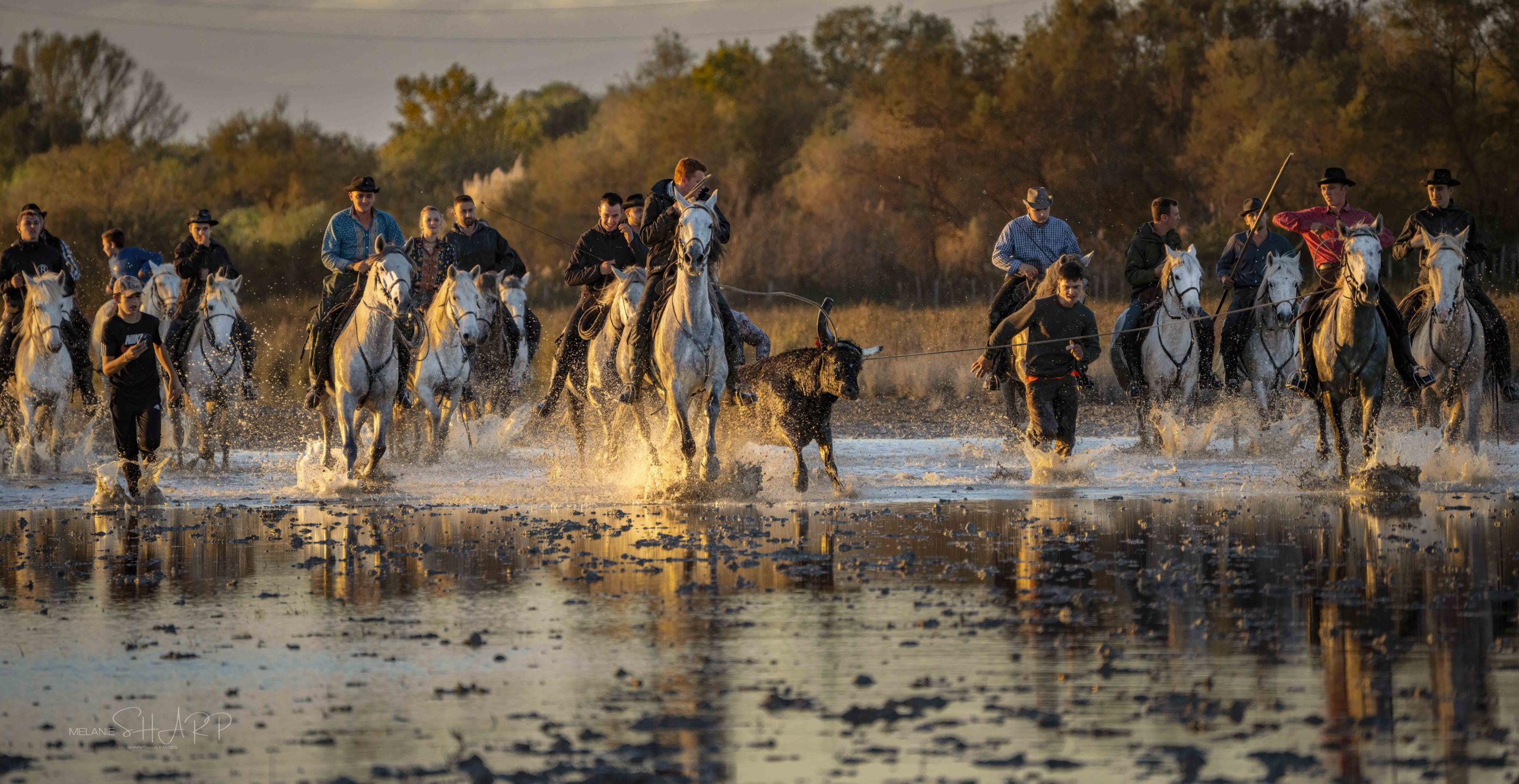
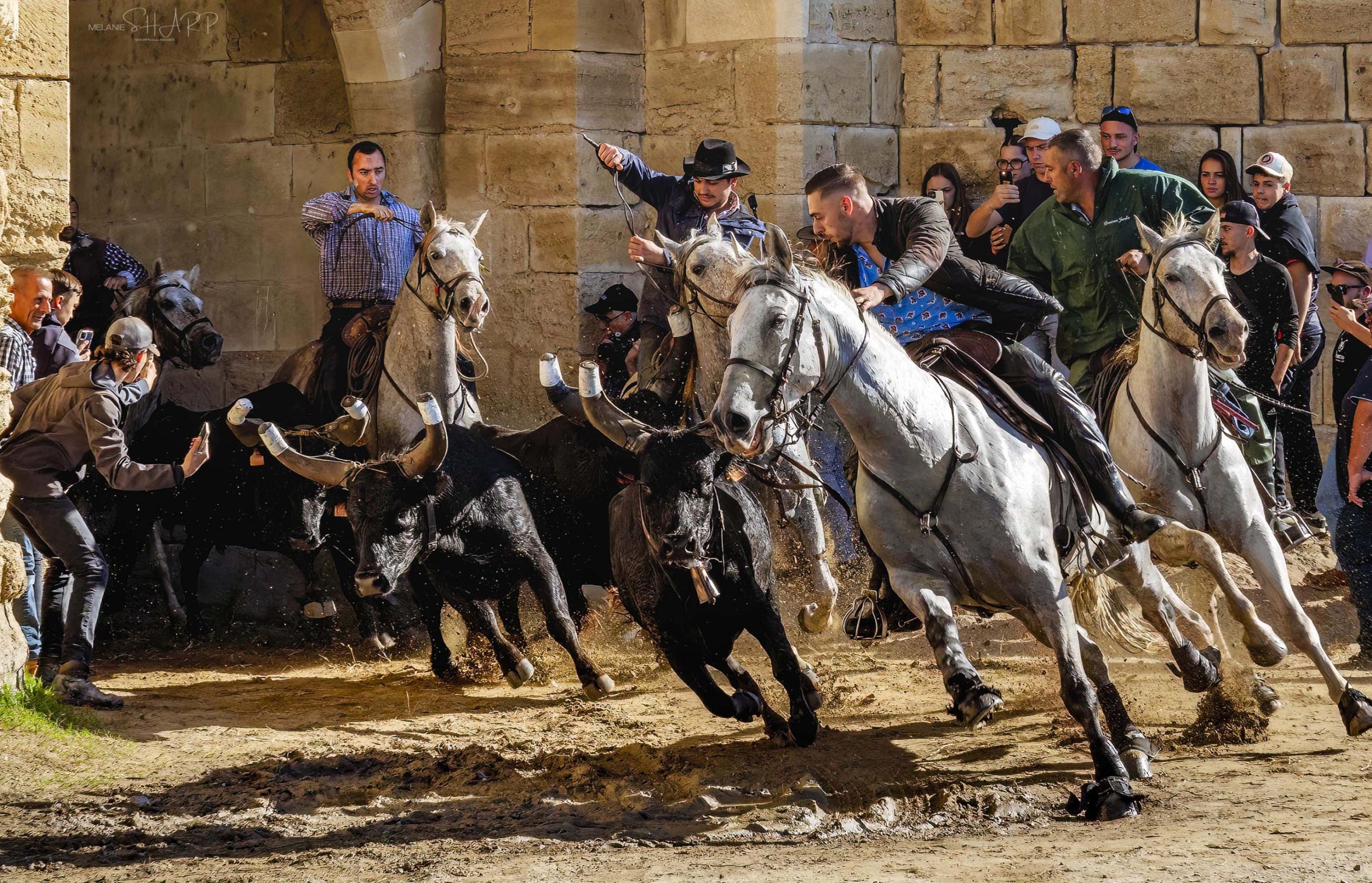
- Abrivados and Bandidos – the dramatic herding of Camargue bulls through village streets by mounted gardians (the traditional cowboys of the Camargue).
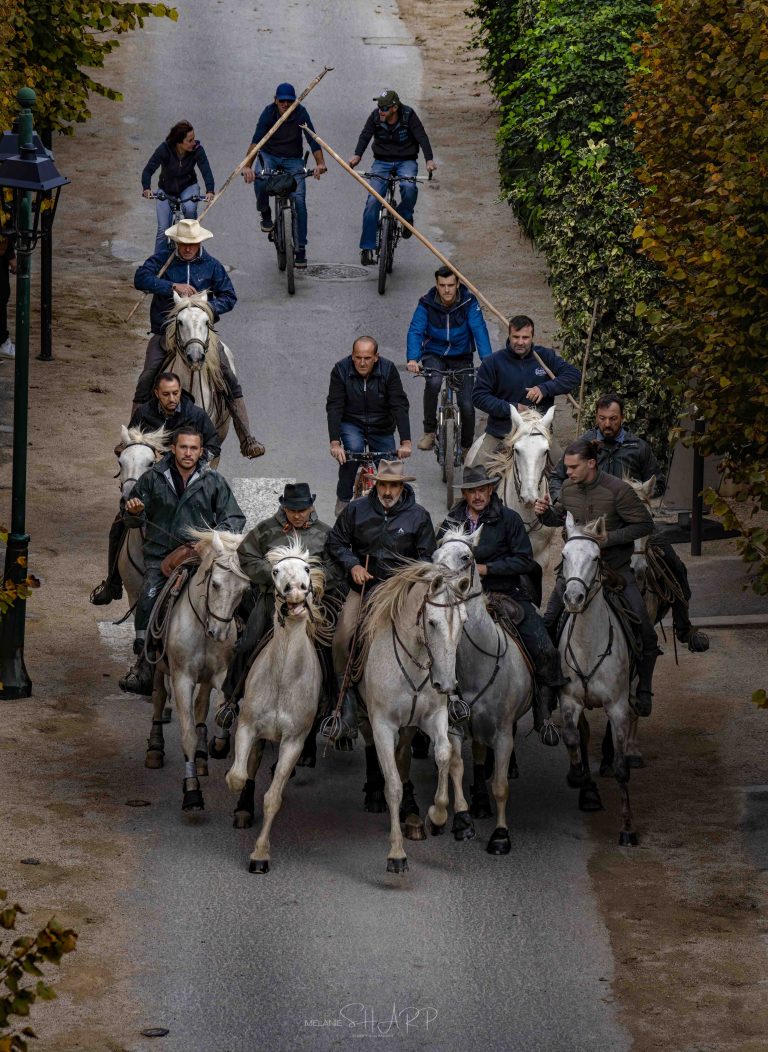
- Parades – horses and riders in traditional dress fill the streets.
- Music and Dancing – stages and village squares come alive each evening.
- Community Feasts – long tables, outdoor grills, and the smell of taureau à la gardiane (bull stew) filling the air.
- Tradition and Togetherness – families return, generations mingle, and visitors are welcomed as part of the crowd.
A Day at the Fête Votive
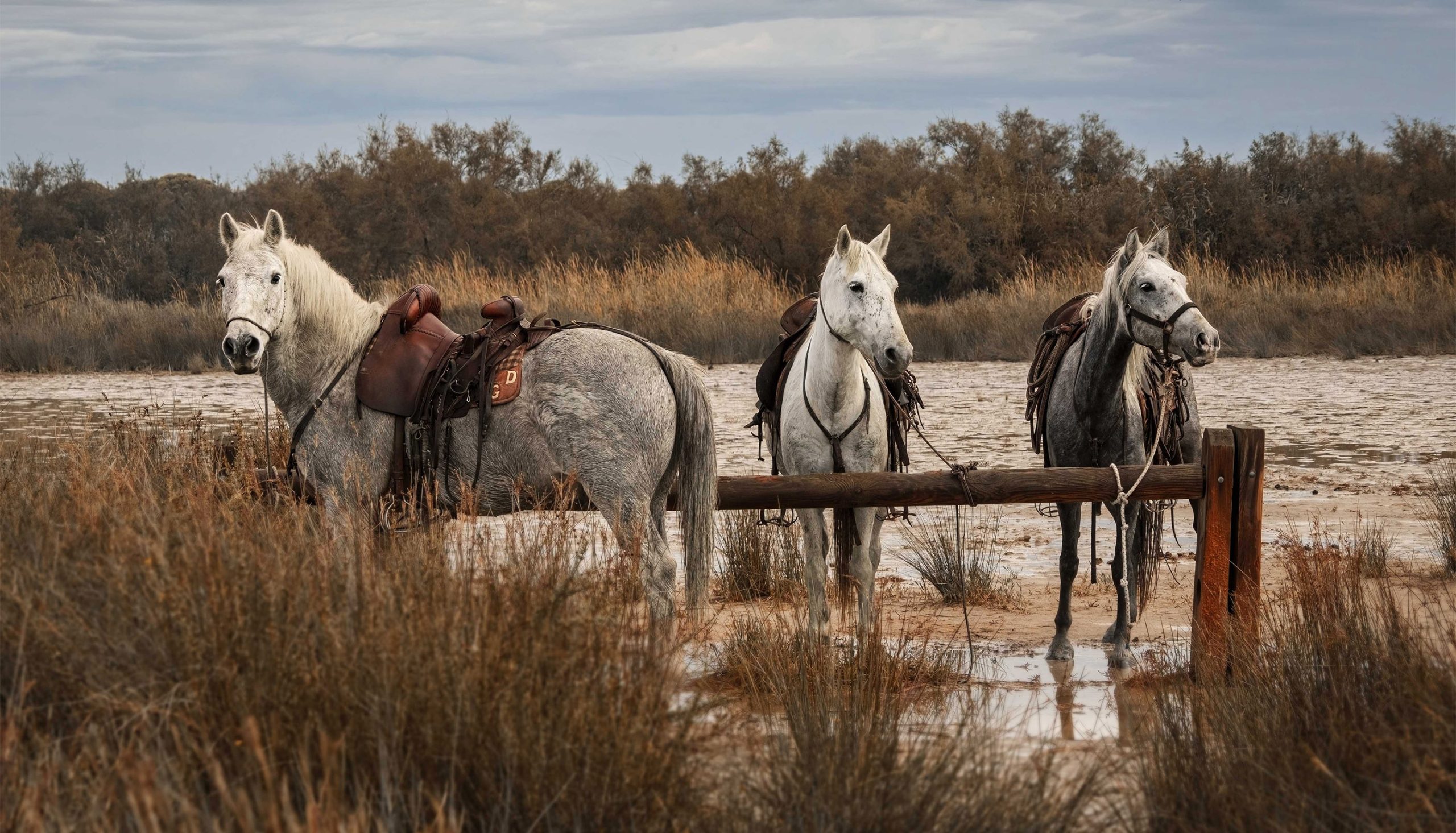
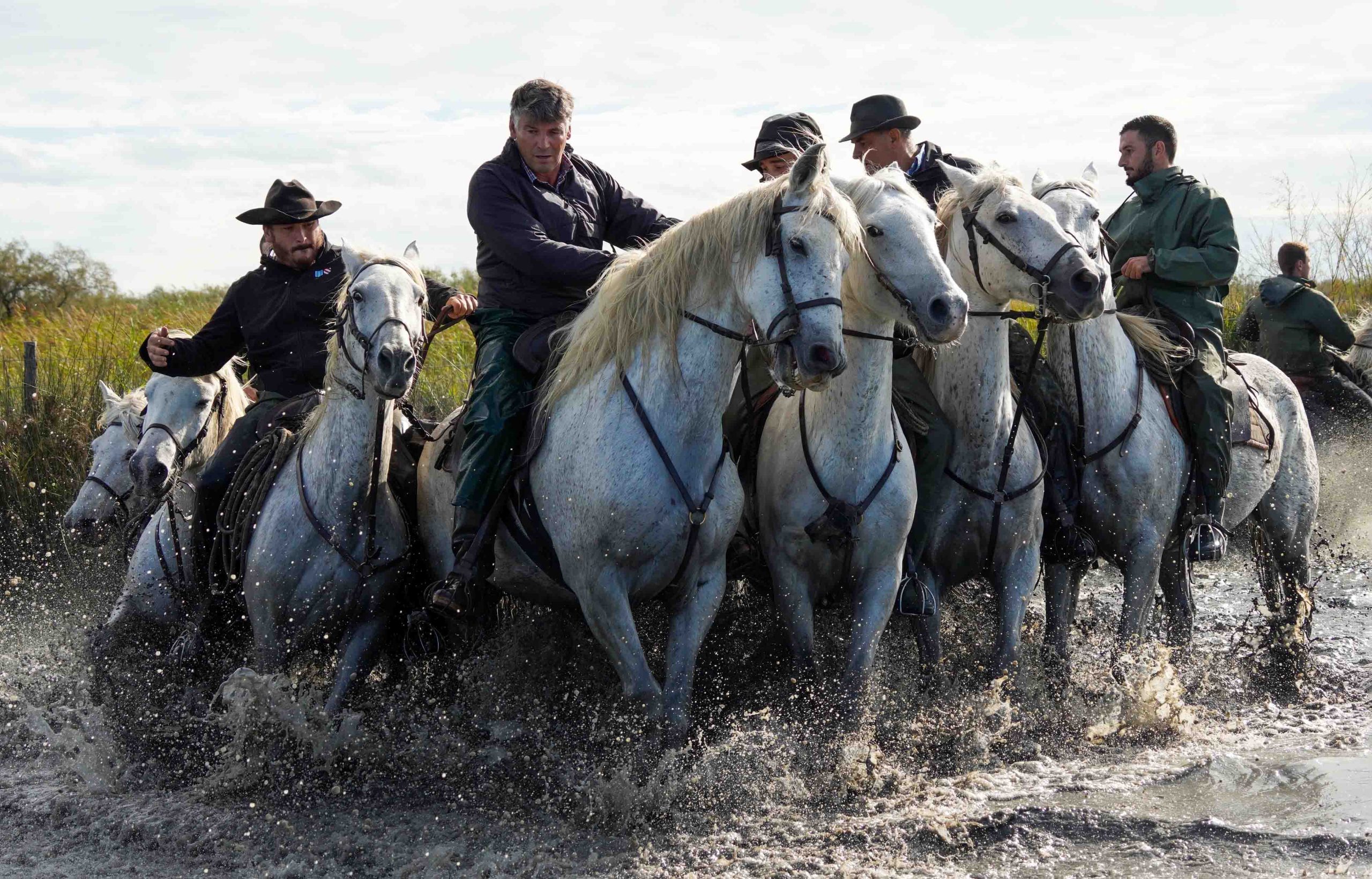
The day begins early, out in the meadow. Gardians, friends, and locals gather in clusters, unpacking picnics and firing up small grills to cook sausages. Some cradle cups of strong coffee, others pour wine or beer — all of them chatting, laughing, and catching up as the bulls arrive and the horses are saddled. Then comes the signal: a sudden boom of the cannon echoing across the fields, marking the start of the abrivado.
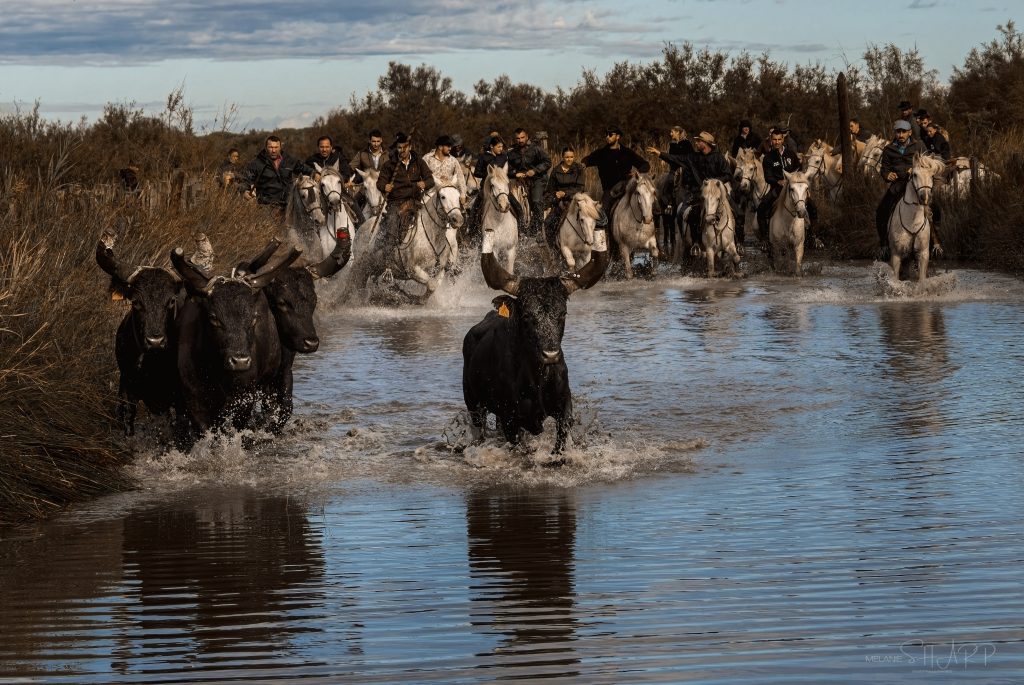
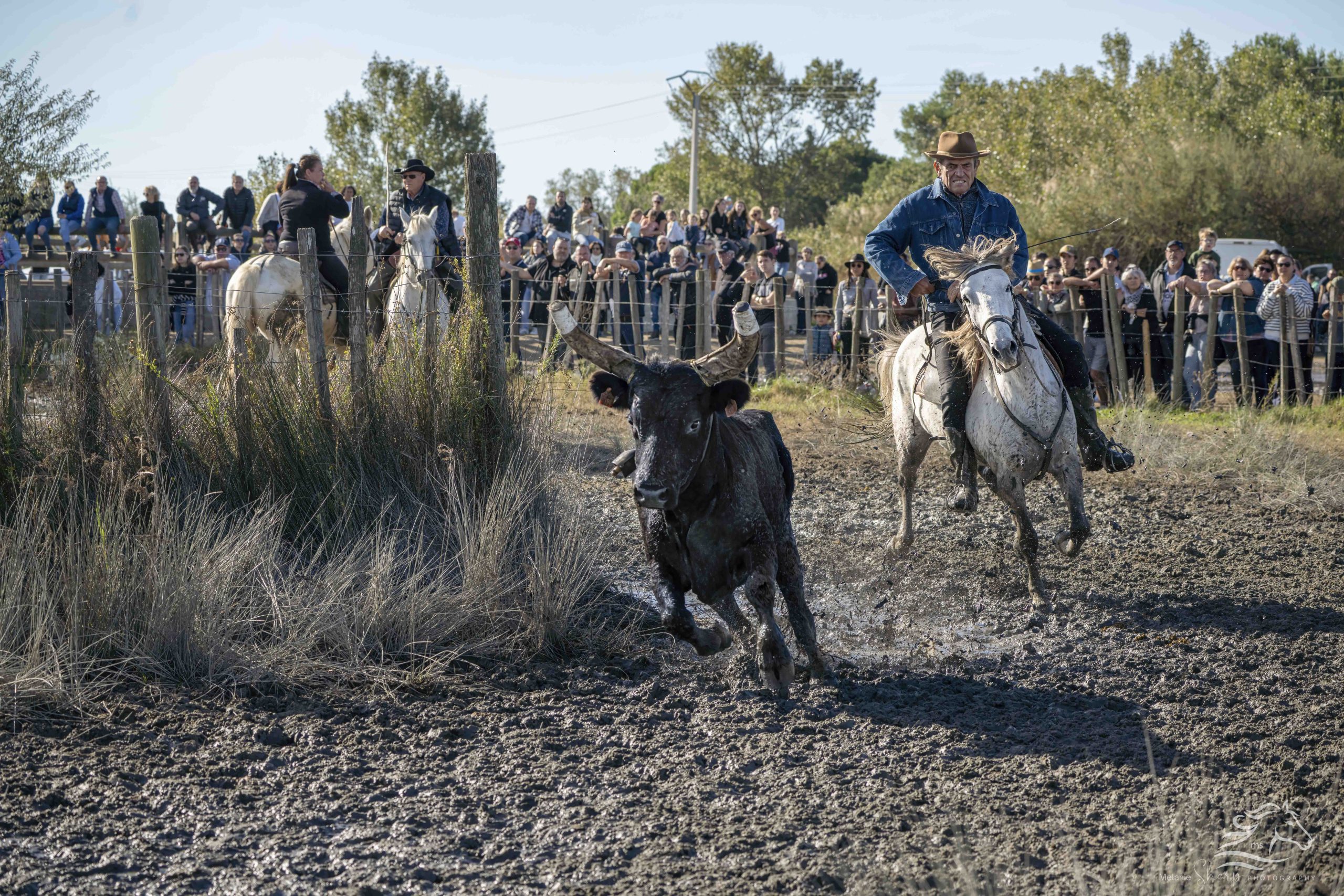
The farrade begins — the sorting. From the corral, four or so bulls are picked out and sent one by one into the narrow channel. Gardians mount up, forming a living barrier of horse and rider, and drive the bulls forward. With a push and swirl of movement, the animals are turned and corralled again before being released down the channel into the open meadow. From there, the run begins: through grass and scrub, into the town, along packed streets where crowds lean over barriers to watch. The route always ends at the arena on the south side of town — but how each bull gets there is never quite the same.
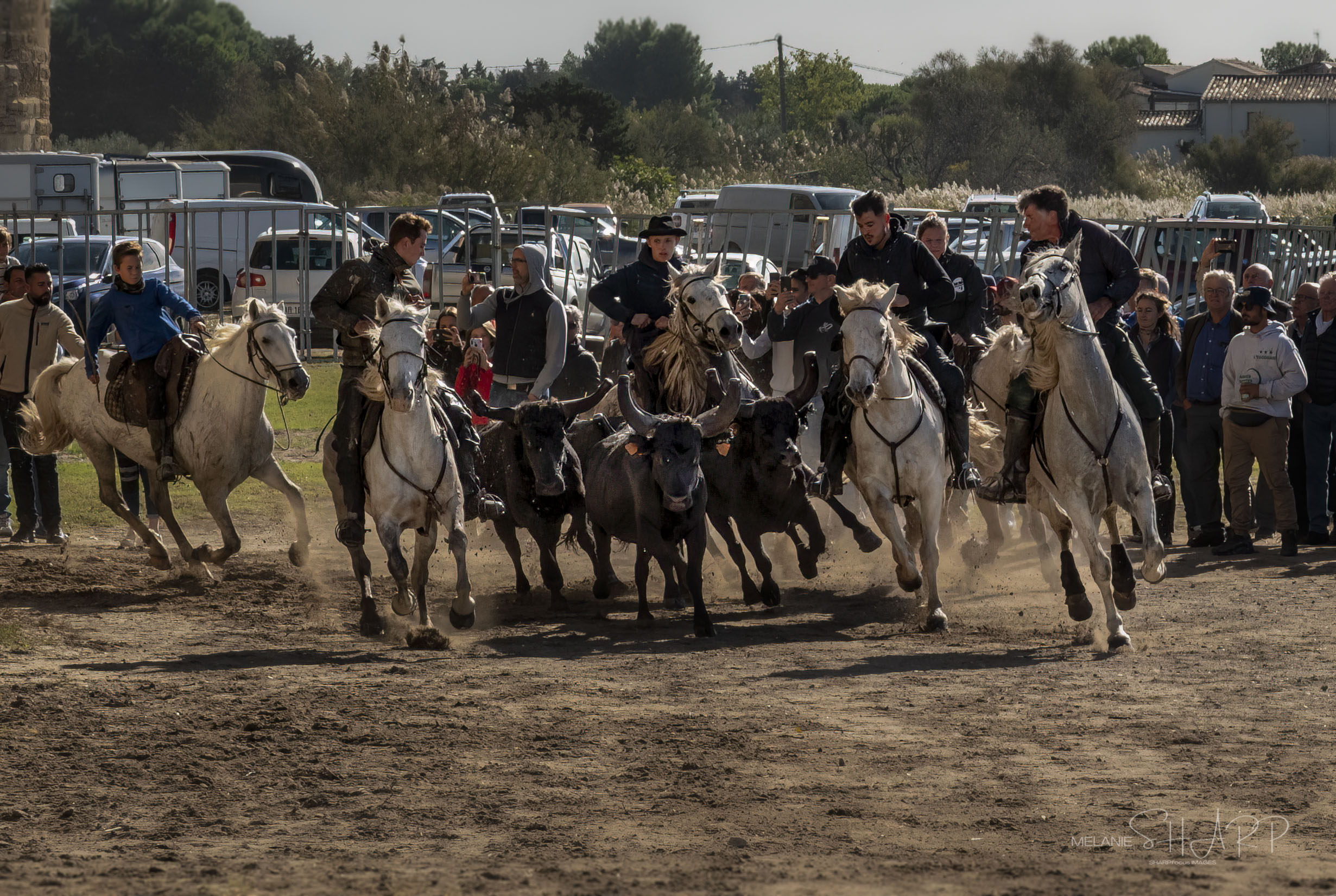
The runs are repeated in waves. Sometimes it’s four bulls together in a thundering charge; sometimes it’s a lone bull flanked by only two riders. Along the way, locals dash into the street to distract or disrupt the herd — dodging back just in time as horses wheel and bulls toss their heads. And the bulls, of course, have a mind of their own: at any point they may try to break free, crashing sideways into a side street or doubling back toward the meadow, forcing the gardians to round them up again. As one group of bulls and riders reaches the arena, another departs from the meadow, keeping the rhythm of hooves and cheers flowing.
Into the Arena
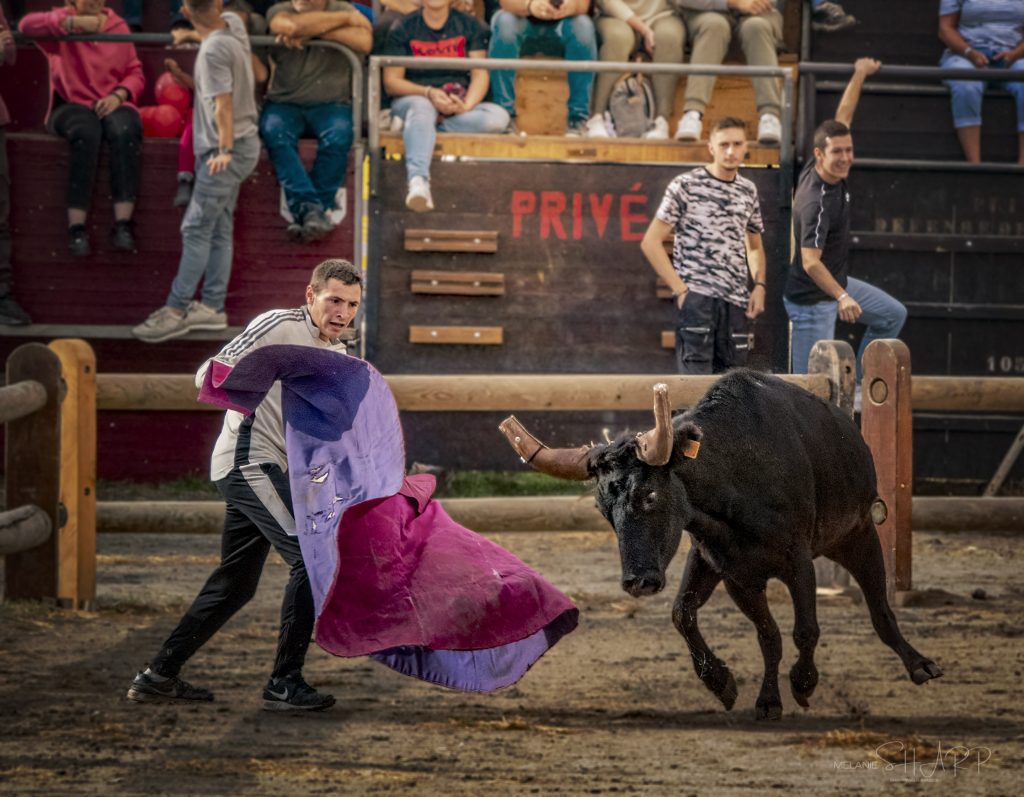
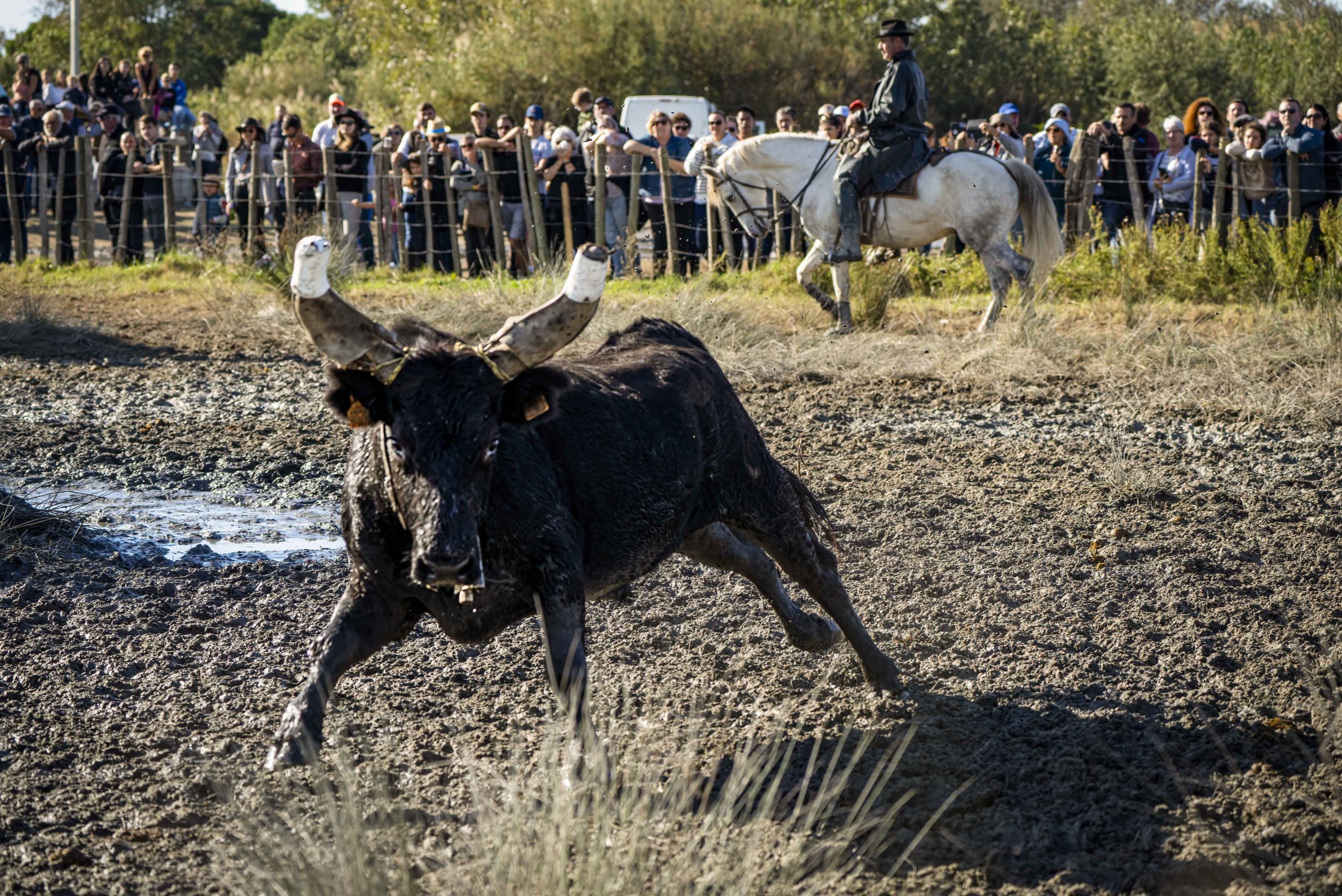
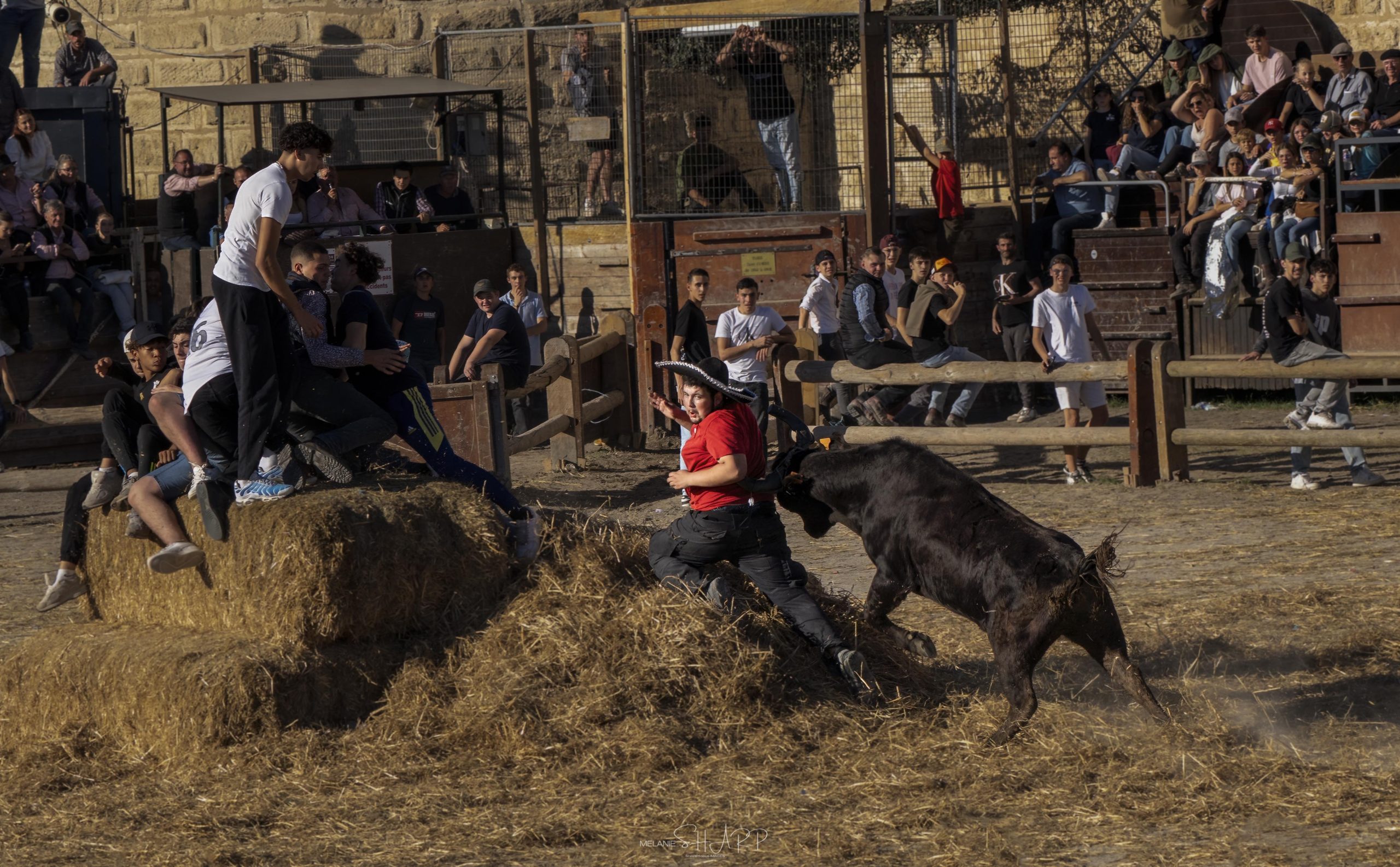
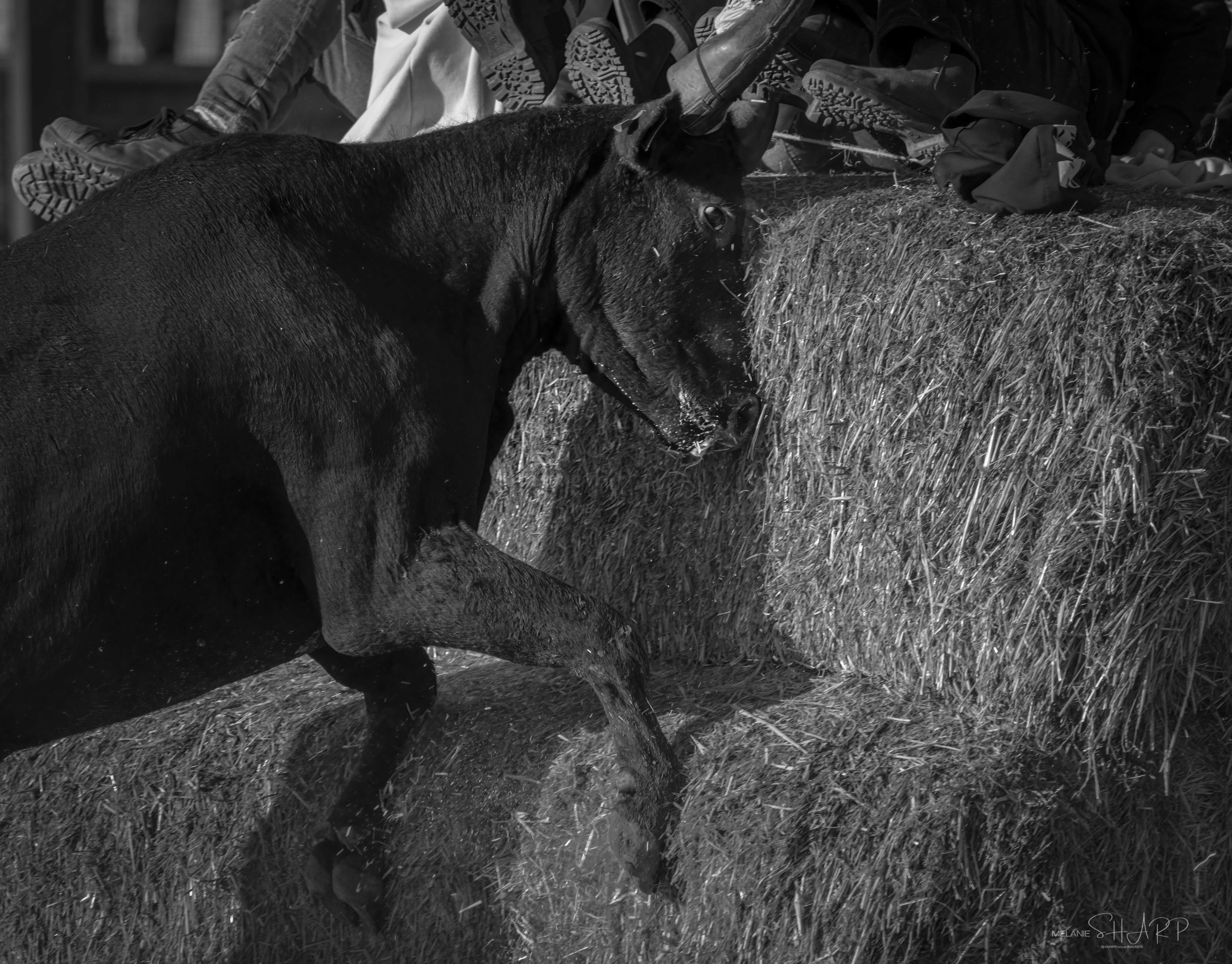
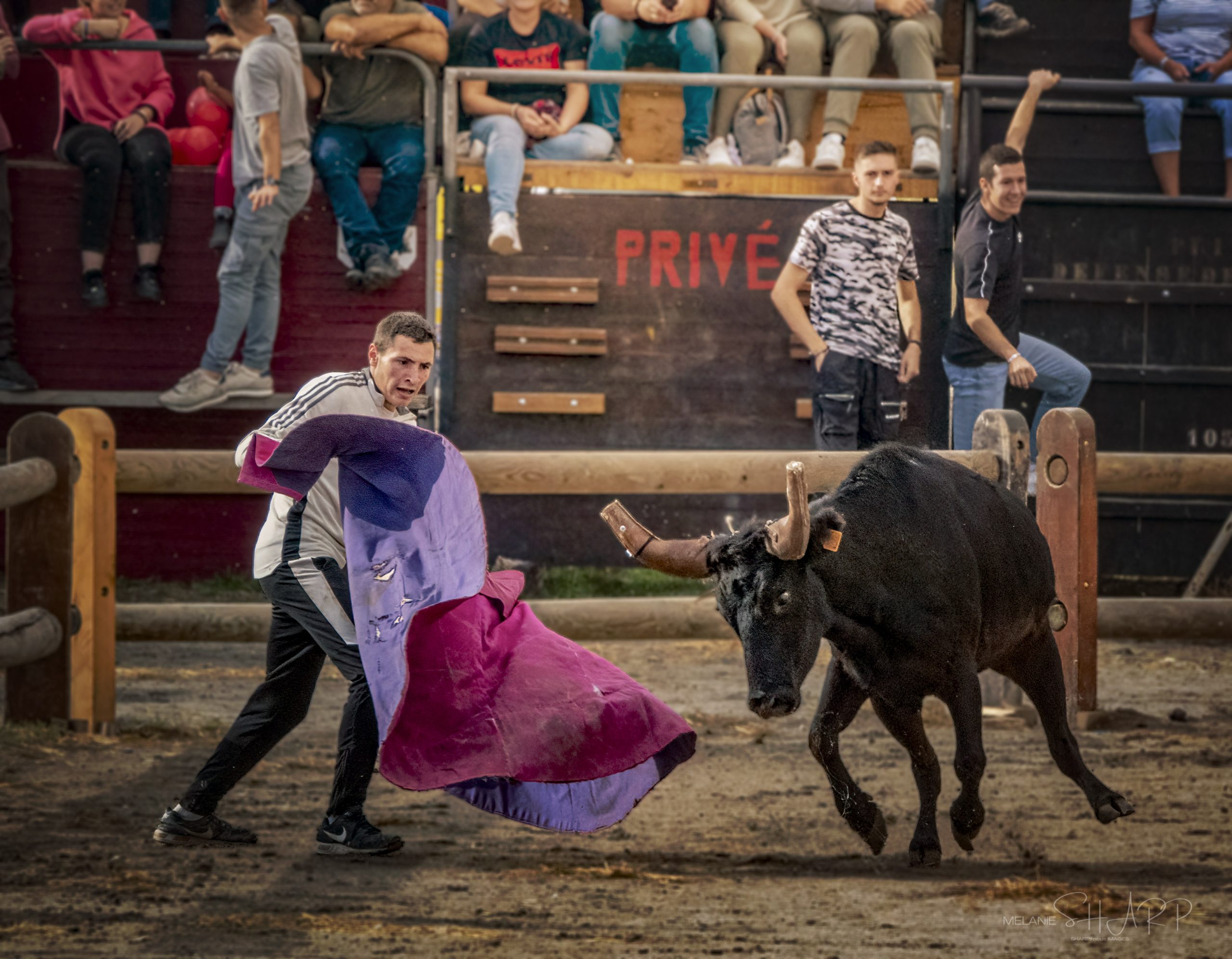
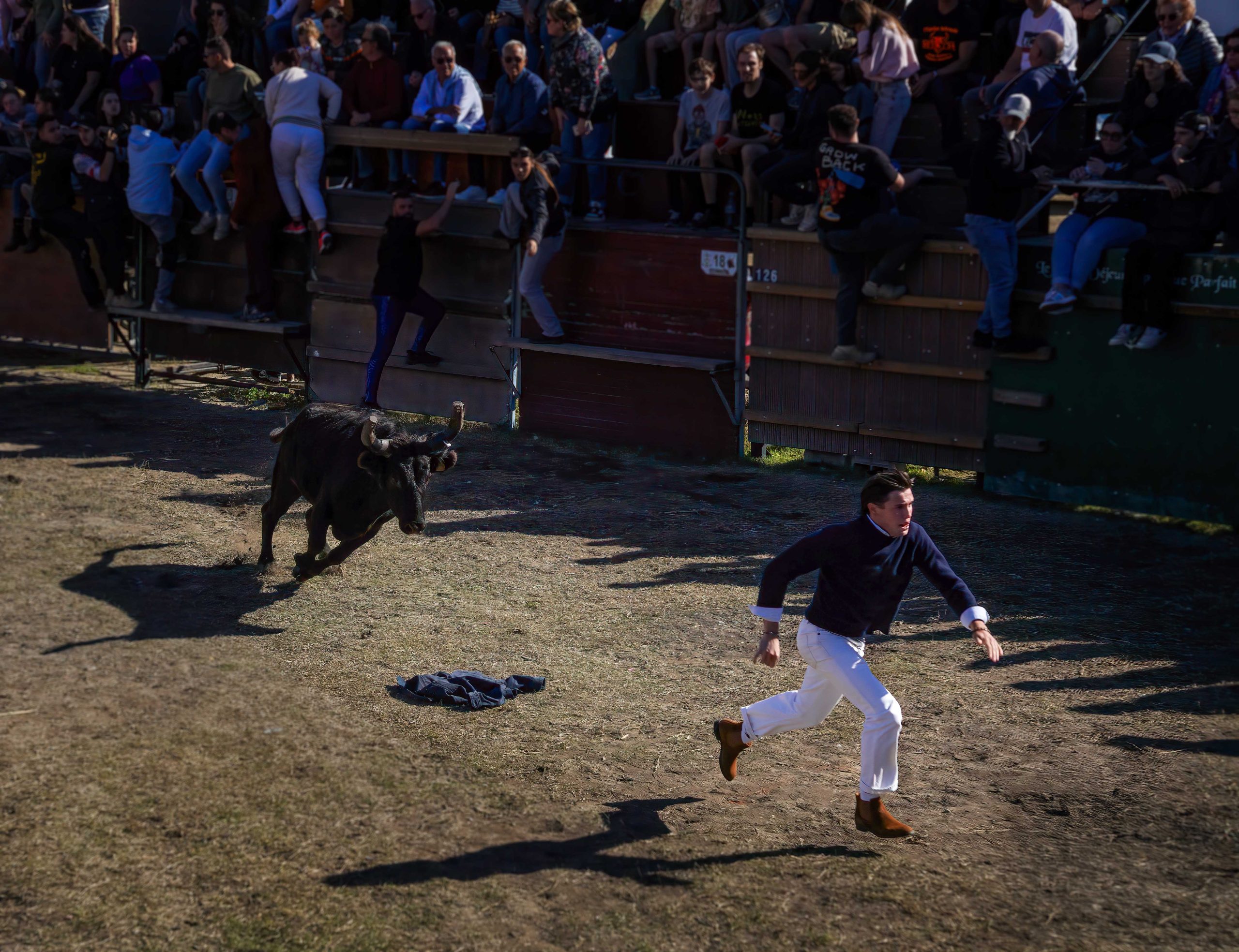
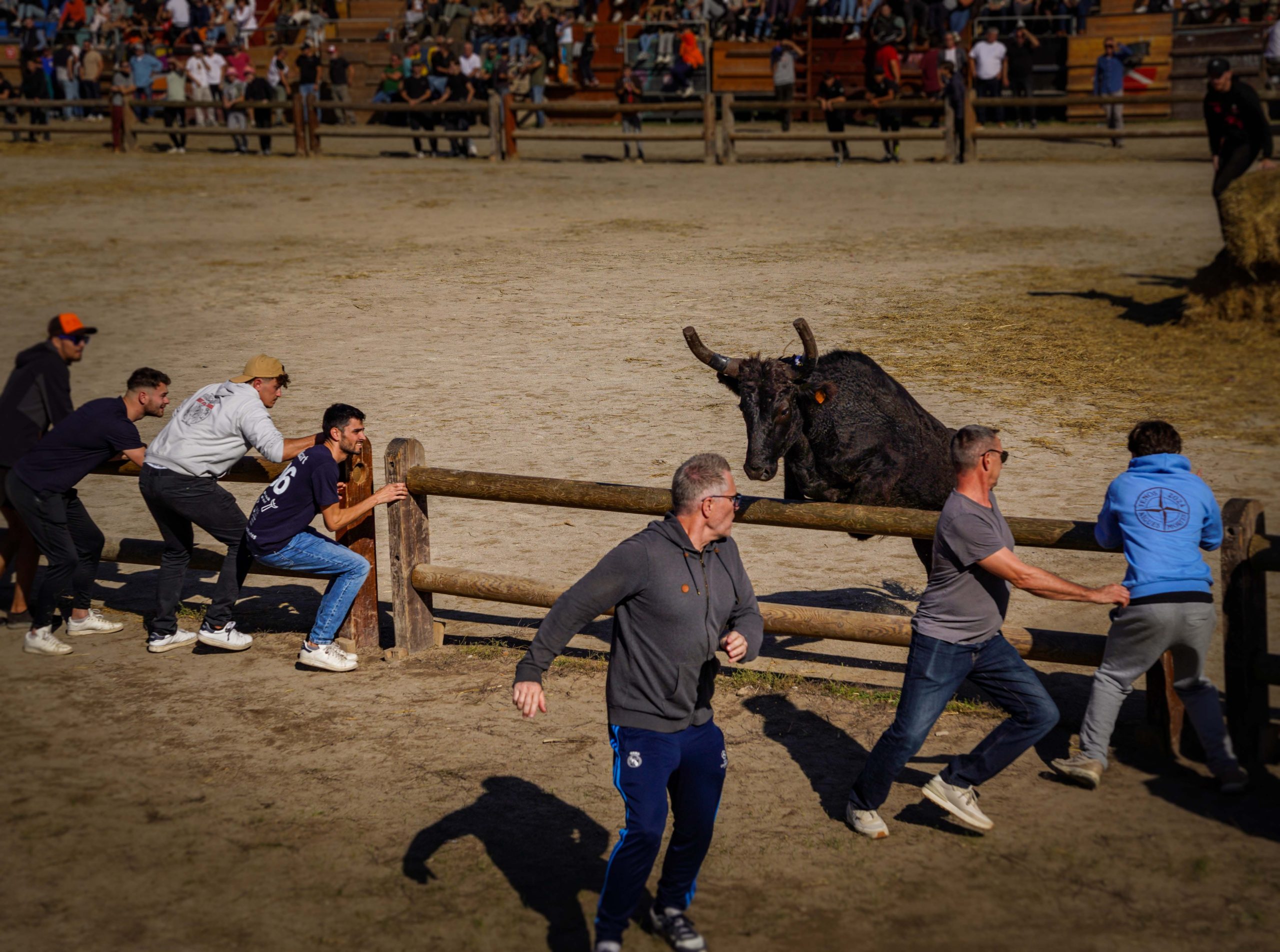
After the abrivado runs through the town, the action shifts to the arena. Here a different manade (farm) presents a few of its herd, and the games begin. Usually it’s a young bull, sent out alone, its horns capped with protective sheaths. The aim is simple in theory — but far from easy in practice: the bull charges around the ring while groups of young men (and sometimes young women, too!) dash in and out, trying to grab at its horns.
Some bulls are fiery from the start, spinning, charging, chasing poeple, flags, shirts, or anything that flaps. Others are more hesitant, needing a little encouragement before they lock eyes on their target. When a bull’s time in the arena is up, it’s encouraged back towards the exit & waiting lorry — though “guided” is often wishful thinking. More than once, a stubborn bull has refused to leave, and so a second, older bull, with a large bell around it’s neck, is released to help persuade it. Suddenly two bulls are loose, and the games double in energy as the young challengers still try their luck.
But beyond the laughter and the chaos, there’s a tradition at play. For many of the youngsters who leap into the ring, this is a way of proving themselves — to their peers, their families, and sometimes even to potential suitors watching from the stands. It’s a test of courage, quickness, and flair, played out in full view of the community.
Finally, in a crescendo of chaos, the last ten minutes see all six or seven bulls released together. The ring becomes a whirl of hooves, horns, and cheers, as bulls wheel and charge, the crowd roaring approval whenever someone dares close enough. It’s wild, it’s noisy, it’s dangerous — and it’s pure Camargue.
The Bandido – The Return Run
As the sun begins to dip, the canon thunders once more — this time to mark the bandido, the reverse of the morning’s abrivado. Two to four bulls are released at a time into the main arena, where the gardians gather them tightly and prepare for the final runs of the day. This repeated until all the bulls are reurned.
When all is ready, the great gates swing open and the small group of bulls is driven out into the streets. Once again, hooves echo on the cobbles as the bulls charge forward, flanked by horses and riders, cheered on by the crowd. But this time, the route leads back to the meadow. There the bulls are corralled, sorted, and finally loaded for the journey home.
It’s a fitting close to the fête’s heartbeat: a full circle of tradition — from meadow to town, from town to meadow again — a cycle that has played out for centuries and still thrills every time.
Meanwhile in the Town
While the gardians and bulls keep the adrenaline pumping in the meadow and arena, the town itself takes on a festival glow. Live music fills the main square, spilling out into the streets as locals and visitors dance, laugh, and wander between bars and restaurants that are packed to the brim. Just outside the medieval walls, a bright funfair lights up the night sky — carousels spinning, games clattering, and the smell of candy floss, grilled meats, and churros drifting on the air.
Street vendors serve everything from tapas to wood-fired pizza, while pop-up discos keep the younger crowd moving until the early hours. The whole town and the surrounding villages come out to play, creating a sense of celebration that lasts from morning till long after midnight.
The Fête Votive of Aigues-Mortes is by far the largest in the region, and it carries extra meaning: it marks not just the end of summer, but also the close of the annual salt harvest that has shaped the town for centuries. In every way, it is a festival of endings and beginnings — a farewell to the heat of summer, and a joyful welcome to the golden days of autumn.
Click on the image to enlarge